As a first-person essay, our reviewers have not verified this. MyndStories doesn’t necessarily endorse these views and should be considered as lived experience only.
Sometime last month, I told my mom that I was restarting therapy, and she said ok. A few minutes into our drive, she asked, is your back hurting again? I said, no, why do you ask?
She said, this therapy that you are starting, is it that physiotherapy that we got done for you earlier?
It was an innocent question. It also made me realize that for someone so vocal about mental health challenges, I haven’t figured out how to tell my mom what therapy really is. This article is an attempt to rectify that situation.
So, how do you explain therapy to an Indian household and Indian parents?
Remember, their closest understanding of it is – Shahrukh Khan being a therapist in Dear Zindagi (but in real life, your therapist will not go cycling with you, and they will also not have a creaking chair that subtly implies towards the end that the therapist might be in love with you). For the most part, however, Dear Zindagi gets it right.
A therapist is a person you can speak to about your daily life, your past, your anxieties, your narratives, your future, and your whole life.
The idea is that the therapist will not judge you and your choices. The therapist will listen, possibly take notes, try to show you patterns in your decision-making, and ask questions that help you understand yourself a little better.
Now, for those who have undergone therapy, this definition makes sense – therapy is a process through which an external mental health expert facilitates a better understanding of yourself to you.
But in the Indian content, while it is okay to see SRK as a therapist and reasonably justified because the patient Alia Bhatt had a s***ty childhood, other parents are thinking, why does my child need therapy? They had great childhoods. Ahem…
Let’s try once again.
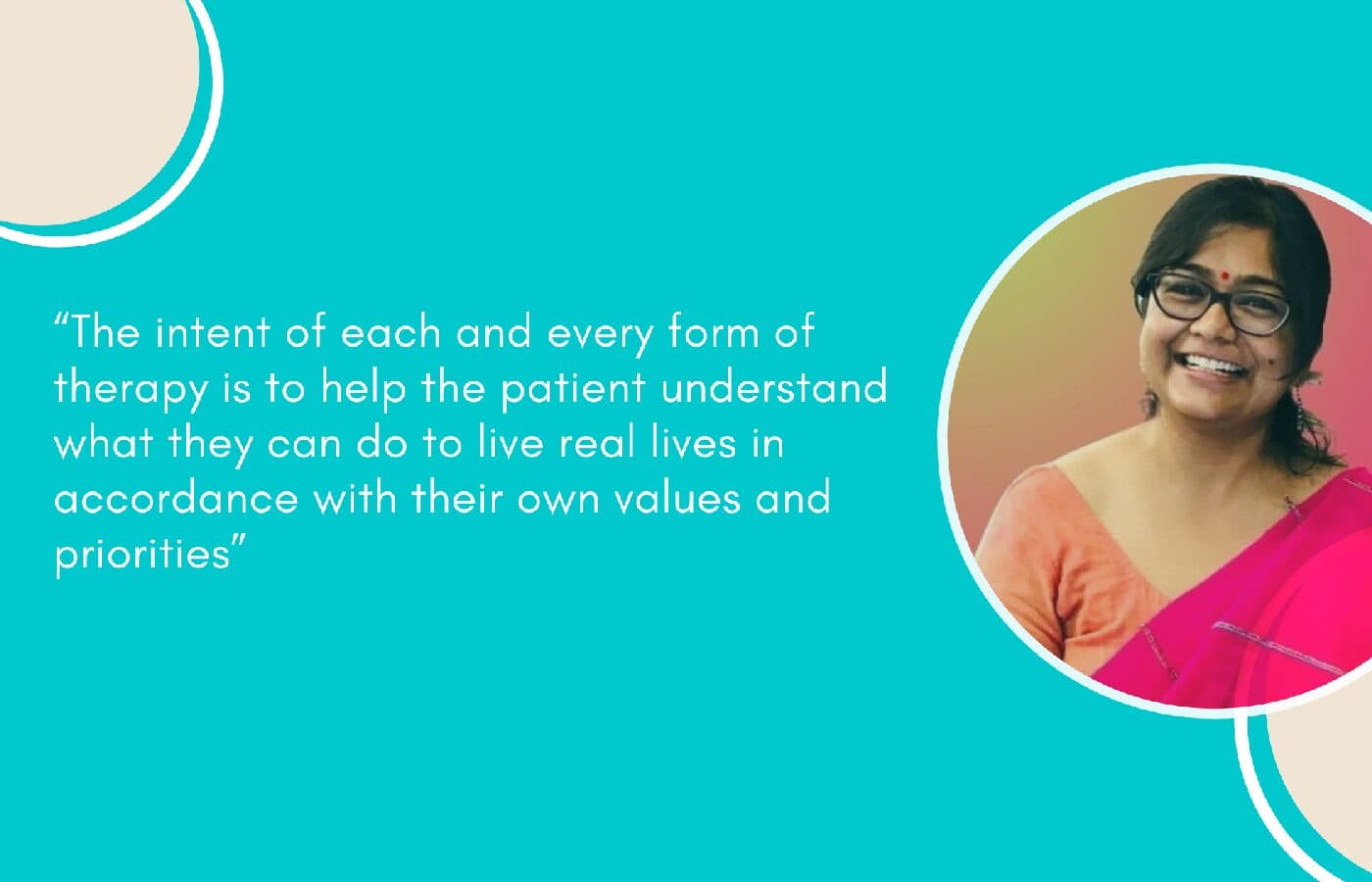
Therapy is a professional form of counseling in which people learn how to support themselves through difficult life experiences. This can take various forms—talk therapy, art therapy, movement therapy, dance therapy, and such. The intent of each and every form of therapy is to help the patient understand what they can do to live real lives in accordance with their own values and priorities.
One might then argue – this means that everybody needs therapy!
Yeah, we could all use some or the other form of therapy—sometimes multiple forms. There is no one-size-fits-all, and nobody is above taking therapy or engaging in inner work practices. We all need it from time to time. As I write this, I am going back to therapy after a three-year break.
What happens during or after therapy? Now that all this talking, dancing, drawing, and such has happened, what’s happening under the surface?
Healing. Healing is what is happening.
But first, I want to bring up and completely dispel the one myth that puts people off therapy.
Breakthroughs happen in every session. No. Breakthroughs don’t happen in every session. It takes time, effort, and a lot of work on yourself to arrive at breakthroughs. The therapist will not hand it to you. You have to work at building your own understanding of yourself.
What does healing look like in Indian homes?
The sudden arrival of boundaries
That aunt, uncle, or colleague whose size- shaming you, marriage-shaming you, <x>-shaming you – you decide once and for all that they are not welcome in your life – not even for the sake of your parents’ keeping/ saving face. And you will be called out for it.
There might be looks passed around, meaning, “Don’t talk about this in front of her/ him,” and one day, you won’t even care for that. Once you start setting boundaries, you realize you can set them with everybody – partner, parents, siblings, friends – and yourself. It’s liberating.
The sudden onslaught of grief, anger, and pain
The things that you earlier swept under the carpet will have you react, and how! You might find yourself despondent after an innocuous fight with your parents. You might look at healthy relationships and feel triggered because you don’t have them or maybe because that time of your life is gone.
A lot of unprocessed grief and anger will come up. There can be meltdowns with family, friends, and intimate relationships. You might also choose to move away and start looking at everything with a new “non-face-saving” lens. Given enough time, you might discover who you might be if questions of shame and honor didn’t stain your existence.
The sudden onslaught of embarrassment
When you start realizing your worth and regaining your self-esteem, there will be cringe moments – out of nowhere. You might feel hard-pressed to berate yourself for what you were allowed in your life before this. It’s easy to get caught in this cycle of feeling ashamed of who you used to be and who you are discovering yourself to be.
Don’t be. It’s because you were you earlier that you are becoming you today. Accept it because it will take your family a while. They will suddenly realize that some of their behavior is not sitting well with you – not one bit. Given that they are well-wishers, they might want to show you the error of your ways, so ignore them. Also, choose your embarrassment of what you allowed earlier rather than a momentary peace-keeping gesture.
The sudden arrival of your voice
This needs no explanation, but you will increasingly find it tough to keep silent. And you probably might be driven enough to pick up the baton on behalf of others who are not quite there in the journey. This is a great place to be.
Once again, be wary of friends and family telling you you have changed. You are no more convenient to them, and you know what to do then. This also means that you will start reacting exactly the way you are feeling with no filters. There will be no more swallowed words and forced silences. Suddenly, you will have the loudest voice when you are being wronged or annoyed.
The gradual growth of healthy coping mechanisms
I have found myself reaching for food and aerated beverages the minute my emotional balance is off. The food tends to numb your immediate reaction – and makes you feel sad or bad or mad later. The healthy coping mechanisms teach you to seethe in whatever you are feeling. Earlier, I would find myself intellectualizing my feelings – who said or did what, and what I can do to heal, and so on. Now I only hold still and let my mind take its own trip. If I feel like crying, I cry. If not, I sit quietly without my phone. It gets better with practice.
Therapy and healing are messy – and it’s a mess that you want in your life. It gets inconvenient too for yourself and for your loved ones – and it’s worth every moment of discovery and grief that you have spent over it.
“Healing may not be so much about getting better, as about letting go of everything that isn’t you – all of the expectations, all of the beliefs – and becoming who you are.” – Rachel Naomi Remen.