Be mindful. Practice gratitude. Breathe. Meditate. Sleep well.
Look for any productivity-boosting tips and these search results will come up. Our social media feeds are full of influencers teaching us how to be mindful, and we know we should be – but how? What is the science behind mindfulness? Can mindfulness really bring out the best in us?
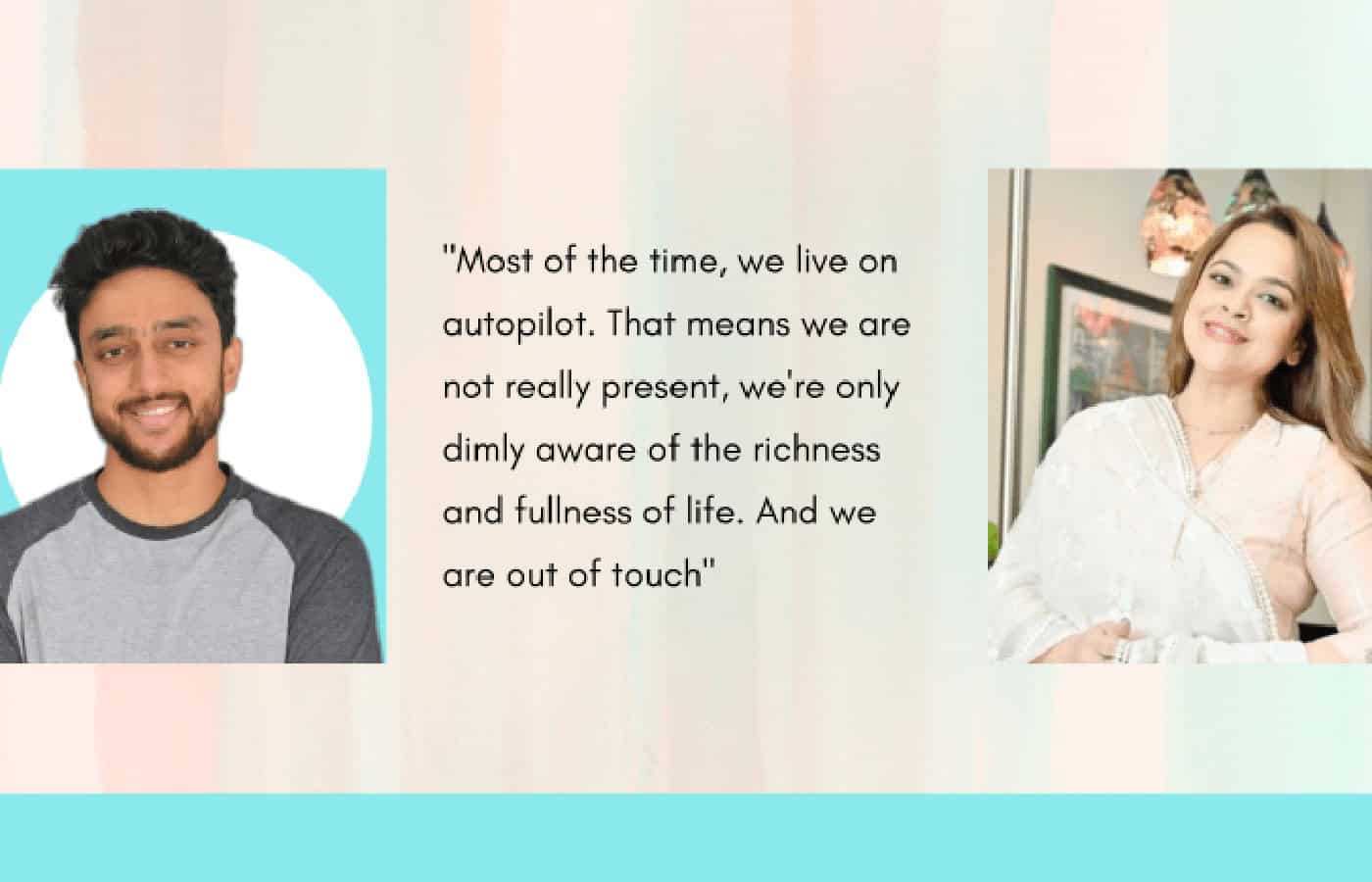
I looked for the answers to these questions and a lot more in my conversation with Geetika Arora Bhojak on The MyndStories Podcast. She is the first certified Mindfulness Based Cognitive Therapy life coach in India from the Oxford Mindfulness Foundation, University of Oxford. Geetika is focused on ensuring workplace health for all and is enhancing the wellness experience in the global corporate world.
Don’t let the myths get to you!
I find mindfulness and meditation used interchangeably and I’ve often wondered how they are different. Geetika clarified this saying that, “Mindfulness is the way of interaction with yourself and the world. Mindfulness is wakefulness in the present, with interest and curiosity.”
Exit autopilot mode
Geetika says, “Most of the time, we live on autopilot. That means we are not really present, we’re only dimly aware of the richness and fullness of life. And we are out of touch.”
This pattern of not being in the moment and dwelling upon the past or the future triggers anxiety. I, for one, am constantly thinking about the future. I may be out for dinner with my friends, but my mind is stuck on that pending assignment from work. After this conversation with Geetika, I realized how to break out of this pattern of thinking.
- Be compassionate with yourself.
- Stop being your harshest critic.
- Don’t make yourself the culprit of everything wrong in life.
These practices will take time, but they can slowly bring us closer to living in the present.
Practicing mindfulness is hard
Earlier this year, I pledged to be more mindful. After a few days of practice, though, I realized it’s harder than it seems. As Geetika says, “It’s hard because our mind is conditioned to be racing, either in the past or in the future, or to be consistently multitasking all the time.”
This conditioning comes from our primitive instinct to survive, to be constantly aware of the threats to avoid. In modern times, we continue operating in this mode of heightened anxiety making it hard for us to concentrate on being in the present, which adversely impacts the quality of our relationships and lifestyle.
The science behind mindfulness
Neuroplasticity is the science of mindfulness. The amygdala is the part in the brain that’s responsible for our emotional responses. It kicks in, controlling our actions when we’re experiencing heightened emotions. This impulse leads to either fight mode – snapping and rage, flight mode – escapism, or freeze mode – isolating from the situation and going silent for a while. This freeze mode is where mindfulness starts.
Freeze mode is our superpower to be silent and stabilize the mind, then come back to the present.
Being mindful
Once you are in the freeze mode, you can use mindfulness techniques to align yourself with the present.
- Train the mind to be practical by recognizing that it’s wandering off or reacting impulsively.
- Observe your breath and focus your attention on redirecting it.
Continuous practice can build a neural pathway in the brain and make it a habit to realign with the present.
Mindfulness reduces the need for instant gratification
Mindfulness teaches us to recognize our emotions and then accept them.
As Geetika teaches us, “Accept your emotion and the reaction will be your choice.”
This thought of being in control of my reactions is very empowering and liberating for me. Every complication will present an opportunity to react impulsively or mindfully – and I choose the latter.
What is Mindfulness Based Cognitive Therapy?
Mindfulness Based Cognitive Therapy or MBCT is a kind of therapy that cultivates the quality of mindfulness. It helps our mind recenter our troubled thoughts, recognize our emotions, and weigh in on the truth of the situation. It helps us avoid overwhelmed responses, unpack the reality instead of brooding over scenarios, and steer our minds back to the present.
Once this becomes a habit, we’ve got ourselves a superpower.