A sweeping new analysis of 293,000 children worldwide has found a significant connection between increased screen time and a higher risk of emotional and behavioral challenges, including aggression, anxiety, and low self-esteem. The findings, published in the journal Psychological Bulletin led by Dr. Michael Noetel and Roberta Vasconcellos, underscore growing concerns among pediatricians and mental health experts about the impact of digital device use on young minds.
Key findings: A two-way relationship
The meta-analysis reviewed 117 longitudinal studies published from 1972 to 2024, focusing on children aged 10 and under. Researchers discovered not only that higher screen use predicted later emotional and behavioral problems, but also that children already struggling with these issues were more likely to increase their screen time—a two-way relationship that complicates the picture for parents and clinicians alike.

Dr. Michael Noetel, associate professor of psychology at The University of Queensland and lead author, explained to ABC News, “The most games that were included were console games, computer games, and mobile games.”
Gaming consoles pose greater risk
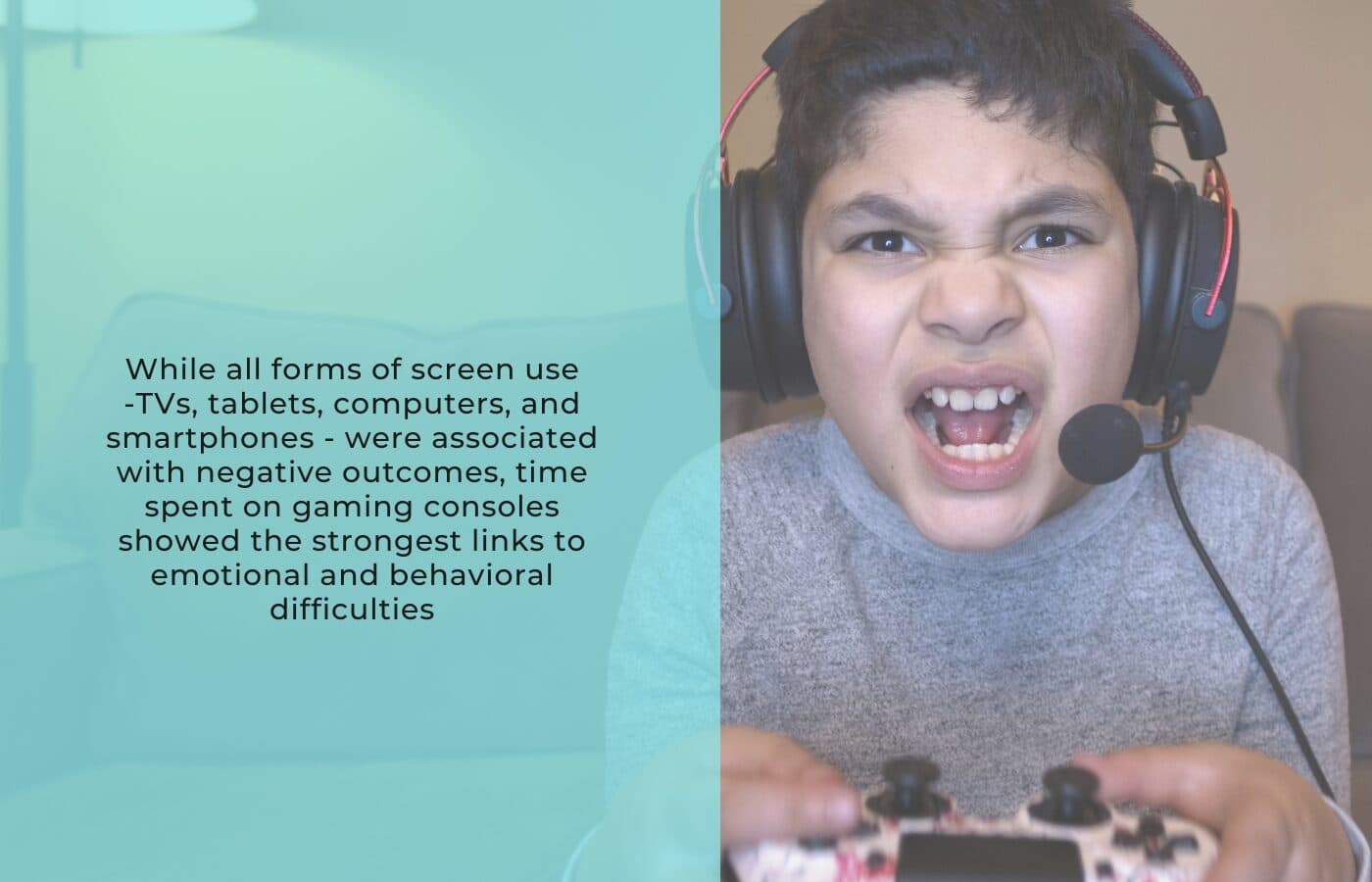
While all forms of screen use—TVs, tablets, computers, and smartphones—were associated with negative outcomes, time spent on gaming consoles showed the strongest links to emotional and behavioral difficulties. These included symptoms of aggression, anxiety, and diminished self-worth.
Interestingly, the study found that it wasn’t just violent games that contributed to these problems. Regardless of the specific content, more time spent gaming was associated with greater emotional difficulties, Dr. Noetel noted. This suggests that the immersive and sometimes isolating nature of gaming itself may be a factor.
Screen time and cognitive development
The research builds on previous studies suggesting that excessive screen time in early childhood can be linked to lower cognitive and language skills later on. For example, a 2023 study in JAMA Pediatrics found that toddlers exposed to more than two hours of screen time daily had poorer communication and problem-solving skills by age four (Takahashi et al., 2023).
Recommendations: Moderation, not elimination
The American Academy of Pediatrics (AAP) recommends that children aged 2 to 5 have no more than one hour of recreational screen time per weekday, and up to three hours on weekends, emphasizing high-quality, educational content and co-viewing with caregivers (AAP, 2024).
The new study found that children who stayed within these guidelines were less likely to experience social or emotional problems than those who exceeded them. However, the authors stress that the goal is not to eliminate screens entirely. Moderate, purposeful screen use can be part of a healthy childhood.
Rising mental health concerns
The findings come at a time when mental health disorders among children and adolescents are on the rise globally. According to the World Health Organization, up to one in seven adolescents now lives with a diagnosed mental health condition(WHO, 2024).

“More than 40% of children aged 8 to 12 are using screens for over four hours a day,” Dr. Tara Narula noted. With increasing rates of anxiety, depression, and behavioral disorders, it’s critical that parents, educators, and policymakers understand the role that digital media may play, she added.
Practical takeaways for parents
- Set clear limits: Follow AAP guidelines for recreational screen time
- Prioritize quality: Choose educational and age-appropriate content; co-view when possible
- Encourage offline activities: Promote outdoor play, reading, and face-to-face social interaction
- Watch for warning signs: If a child shows signs of anxiety, aggression, or withdrawal, consider whether screen habits may be contributing and seek professional guidance if needed
Conclusion
While digital devices are an inescapable part of modern childhood, this landmark study highlights the importance of mindful, balanced screen use. By staying informed and proactive, families can help ensure that technology supports, not undermines, the healthy development of children.