


The TOLAKARI project, Transformation of Lived Experience and Knowledge of Heat, Agriculture and Depression in India, is a five-year, ₹37.9 crore research program funded by Wellcome that may be the most important mental health study in India that almost no one is talking about. Its focus: understanding how chronic heat exposure drives depression among the country's farmers and farm workers, and co-designing community-owned interventions to address it.
The University of Hyderabad's Department of Anthropology has joined the project, which brings together the University of Edinburgh, Ashoka University, the Centre for Sustainable Agriculture, NIMHANS, and the Mariwala Health Initiative. The research uses participatory methods, meaning the communities most affected will shape what support looks like, rather than receiving solutions designed at a distance. The UoH component will receive approximately ₹2.18 crore over five years.
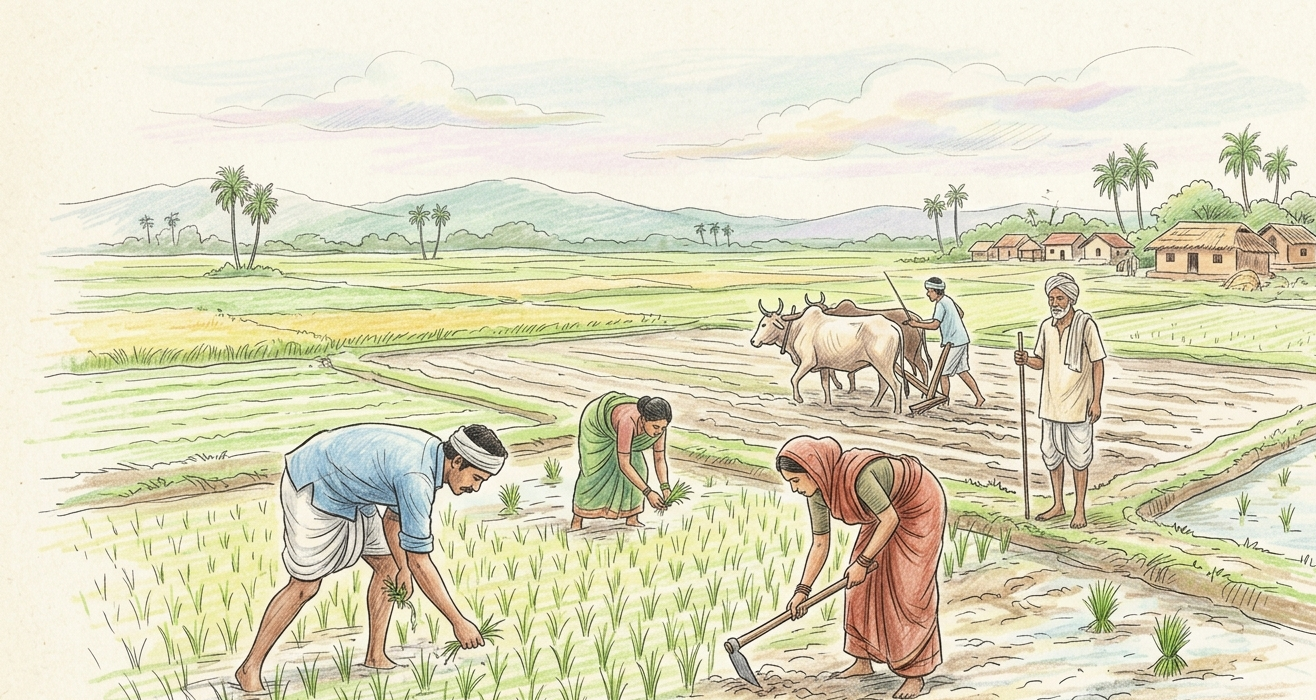
The urgency is real. India lost an estimated 191 billion potential labour hours in 2022 due to heat exposure, a 54% increase compared to the 1991-2000 baseline. Extreme heat reduces crop yields, lowers cultivation incomes, and forces impossible economic decisions in communities where farming is both livelihood and identity. A Mongabay India report from this week adds a coastal dimension: humid heat is intensifying along India's coastlines, affecting fishing communities and coastal farmers in ways that compound financial precarity with physical danger. Unlike dry heat, which the body can cool through perspiration, humid heat impairs the body's ability to regulate temperature entirely, and is more physiologically and psychologically damaging for those working outdoors.
A narrative review published in Frontiers in Public Health mapped the climate-mental health intersection in India, identifying farmers, women, adolescents, and the urban poor as the groups most vulnerable to climate-induced psychological distress. The paper noted that India's mental health system has not yet built climate-related risk into its planning or its training of community health workers.
For MyndStories readers, the climate-mental health intersection is one of the least covered dimensions of India's wellbeing conversation. Farmer distress and rural suicide have received periodic media attention, but the slow, chronic, heat-driven burden of depression in agricultural India remains largely invisible in public discourse. TOLAKARI is a beginning, and it points toward a much larger story that will define the next decade


