On April 1, 2026, Minister of State for Women and Child Development Savitri Thakur addressed a question in the Rajya Sabha about the state of India's mental health infrastructure. Her response outlined the government's efforts under the National Mental Health Programme (NMHP), and while it was a formal parliamentary reply, the details within it are worth understanding.
What the NMHP currently covers
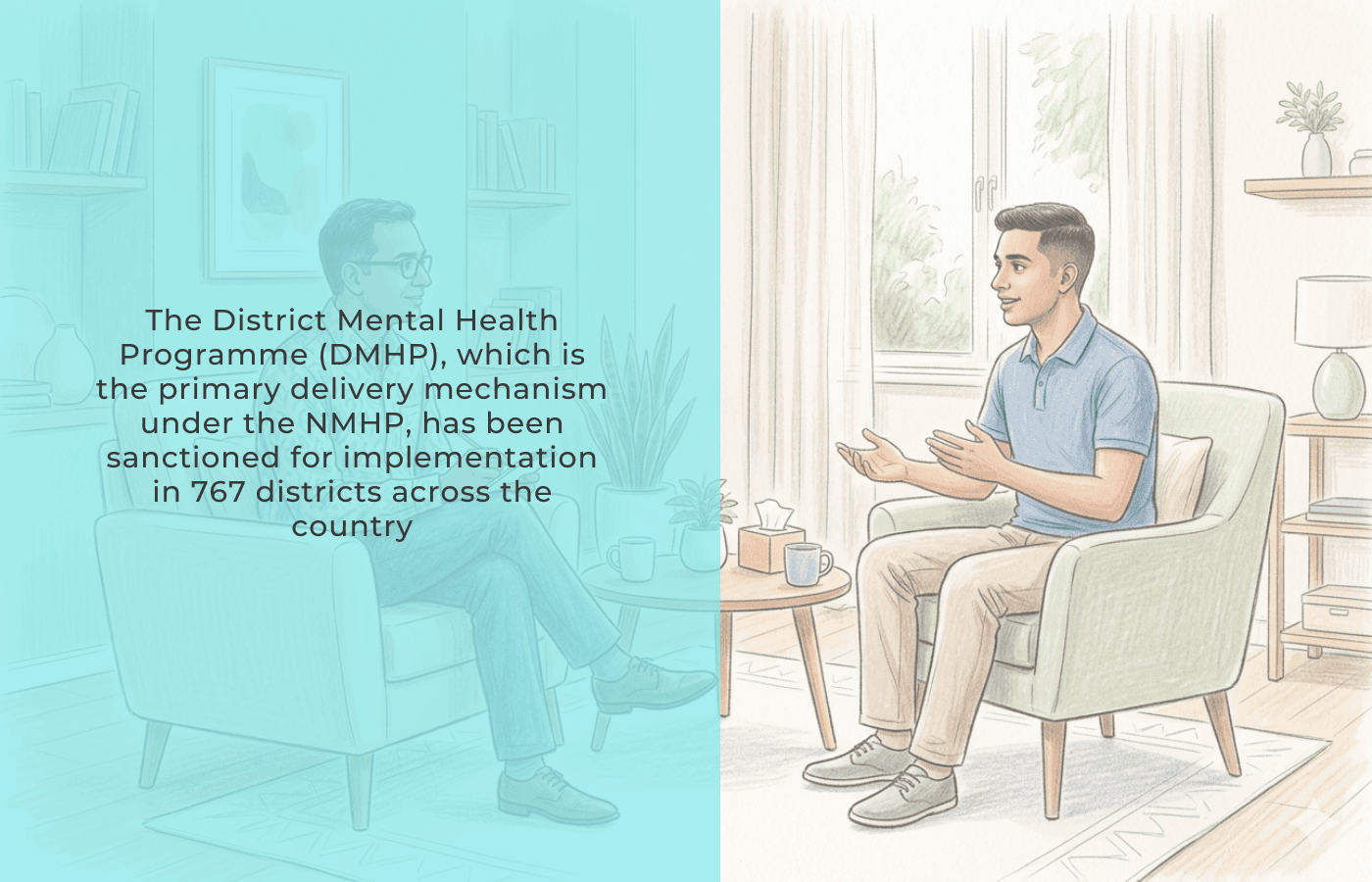
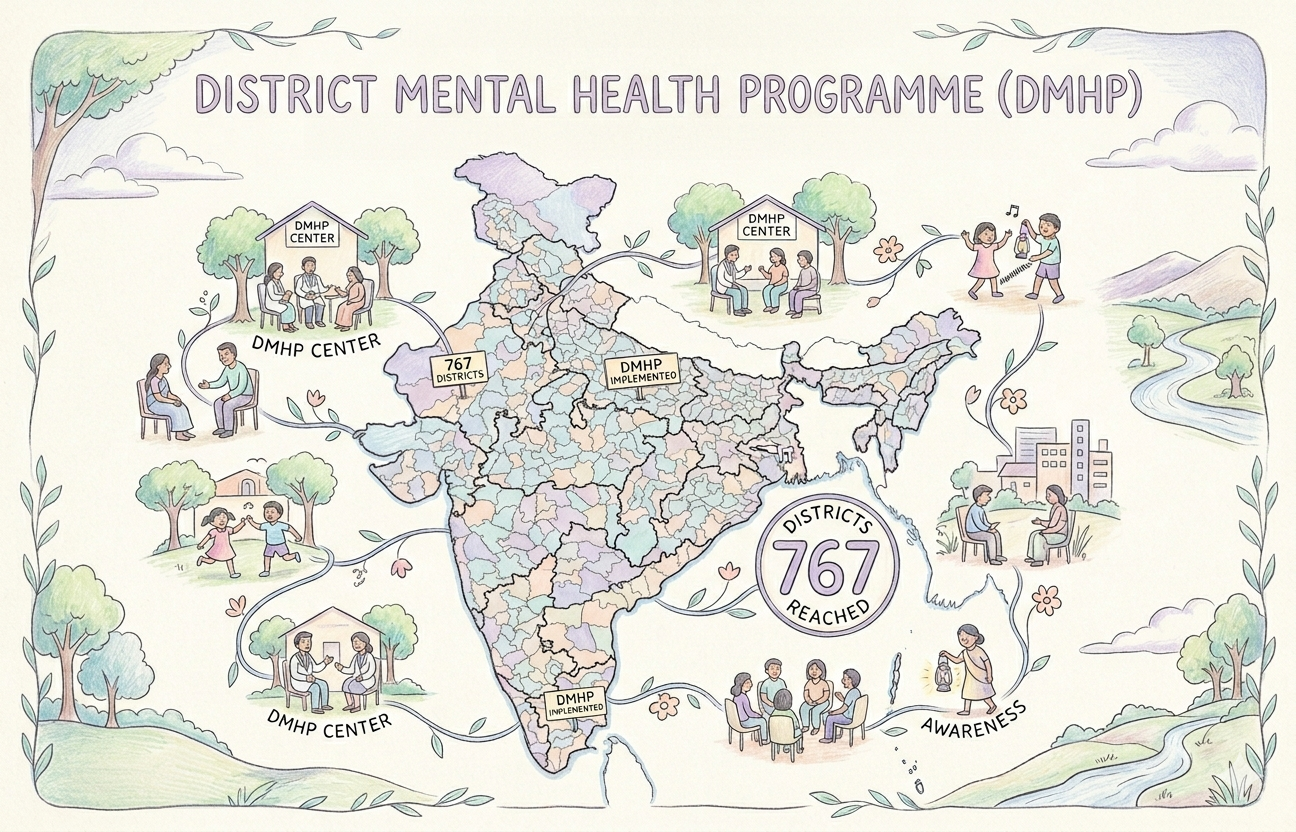
The District Mental Health Programme (DMHP), which is the primary delivery mechanism under the NMHP, has been sanctioned for implementation in 767 districts across the country. Funding and operational support flows to states and Union Territories through the National Health Mission.
At the Community Health Centre (CHC) and Primary Health Centre (PHC) level, the services include: outpatient consultations, psychological assessments, counseling and psychosocial interventions, continuing care and support for persons living with severe mental disorders, provision of medications, outreach services, and ambulance services. There is also a provision for 10-bed inpatient facilities at the district level.
Notably, postpartum mothers have been included in the framework, an acknowledgment that maternal mental health, long overlooked in India's public health system, requires dedicated attention.
Postpartum depression affects an estimated 22% of Indian mothers, according to a 2019 systematic review published in the Asian Journal of Psychiatry (Upadhyay et al., 2019).
Primary health care integration
The government reported upgrading more than 1.83 lakh (183,000) Sub Health Centres and Primary Health Centres to Ayushman Arogya Mandirs. Mental health services have been added to the packages of care provided at these facilities under Comprehensive Primary Health Care. This is significant because it signals a move toward integrating mental health into general health care delivery at the grassroots level, a model that the World Health Organization has advocated for decades.
Tertiary care and workforce development
Under the tertiary care component of NMHP, 25 Centres of Excellence have been sanctioned. These centers are designed to increase the intake of postgraduate students in mental health specialties and provide tertiary-level treatment. The government has also supported 19 government medical colleges and institutions to strengthen a total of 47 postgraduate departments in mental health specialties.
This matters because India's mental health workforce shortage is severe. According to WHO data, India has approximately 0.3 psychiatrists per 100,000 people, compared to a global median of 1.3. Training more professionals is essential if these programs are going to serve the populations they are designed for.
Tele MANAS: reaching people by phone
Minister Thakur also shared an update on the National Tele Mental Health Programme, known as Tele MANAS. As of her statement, 53 Tele MANAS cells across the country have handled more than 29.82 lakh (nearly 3 million) phone calls. For context, Tele MANAS was launched in October 2022 with the goal of providing free, accessible mental health support by phone, especially to people in underserved and rural areas.
What does this mean on the ground?
The numbers are meaningful: 767 districts, 183,000 upgraded health centers, nearly 3 million calls answered. These are real markers of scale. The harder question, and the one that policy announcements rarely answer, is about quality. Are the counselors at CHCs and PHCs adequately trained? Are the 10-bed district facilities actually operational? Are patients being followed up after their first visit?
India's mental health policy ambition has grown significantly in the past five years. The Mental Healthcare Act of 2017, the launch of Tele MANAS, and now this expanded NMHP framework all point in the right direction. The challenge has always been implementation, and the distance between a sanctioned program and a functioning one can be vast.
Still, the fact that mental health was addressed in Parliament, that postpartum mothers were specifically named, and that concrete numbers were shared is a step worth acknowledging. In a country where mental health funding still accounts for less than 1% of the total health budget (WHO Mental Health Atlas, 2020), every inch of policy progress counts.