A new study published in BMJ Nutrition, Prevention & Health finds that adults who follow calorie- or nutrient-restrictive diets are more likely to experience depressive symptoms, especially men and people who are overweight or have obesity issues.
What did the study find?
Researchers analyzed data from over 28,000 U.S. adults who participated in the National Health and Nutrition Examination Survey (NHANES) between 2007 and 2018. Participants completed detailed dietary assessments and the Patient Health Questionnaire-9 (PHQ-9), a standard tool for evaluating depression.
The results showed that people on calorie-restrictive diets had higher depression scores (an average 0.29-point increase on the PHQ-9) compared to those not following any specific diet. The effect was more pronounced in those with higher BMI: overweight individuals on calorie-restricted diets had a 0.46-point increase, and those on nutrient-restricted diets had a 0.61-point increase in depression scores compared to non-dieters.
Why does this matter?
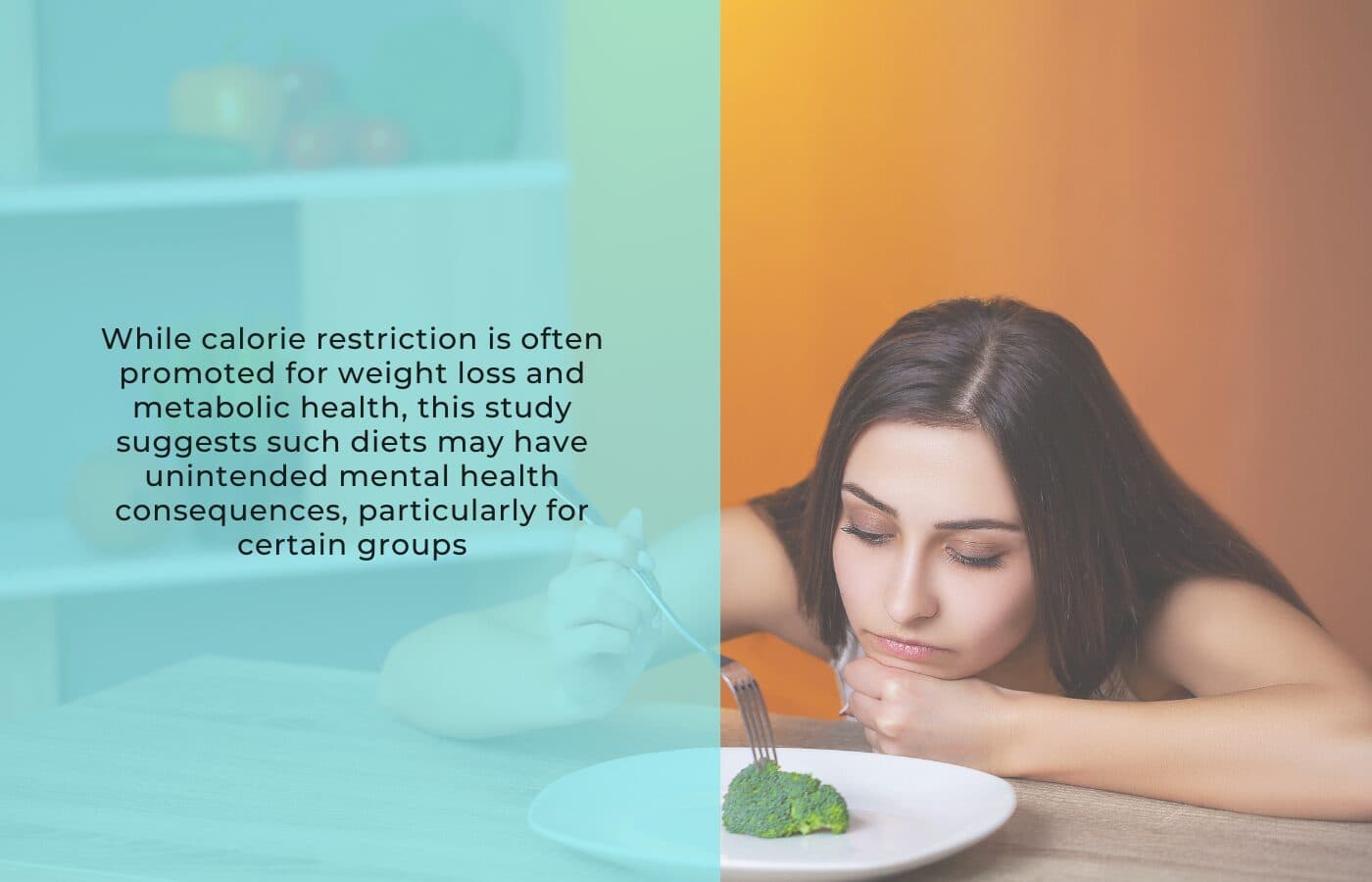
While calorie restriction is often promoted for weight loss and metabolic health, this study suggests such diets may have unintended mental health consequences, particularly for certain groups. The findings contrast with some earlier controlled trials, which sometimes suggested mood benefits from mild caloric restriction.

The researchers caution that restrictive diets may not be universally beneficial and could actually worsen mood for some people. Dr. Venkat Bhat, a psychiatrist, director of the Interventional Psychiatry Program at St. Michael’s Hospital and University of Toronto, and one of the study’s authors, emphasized the need for balanced, sustainable dietary modifications that fulfill nutritional requirements and account for individual psychological effects to help minimize any adverse impacts on mood.
Diet quality and mental health
This study adds to a growing body of research linking diet quality to mental health. For example, a 2022 meta-analysis in Cureus found that diets rich in fruits, vegetables, whole grains, nuts, seeds, lean proteins, and fish are associated with a lower risk of depression, while diets high in ultra-processed foods, refined carbohydrates, saturated fats, and sugary snacks are linked to a higher risk of depressive symptoms.
A 2023 review also highlighted that the Mediterranean diet, which emphasizes plant-based foods and healthy fats, is associated with better mood and lower rates of depression.
Takeaway for readers
If you are considering a restrictive diet for health or weight reasons, it is important to monitor your mood and mental health, especially if you are male or have a higher BMI. Consulting a healthcare professional or registered dietitian can help ensure your dietary approach supports both physical and mental well-being.