A January 2025 report from Sapien Labs has identified a concerning association between early smartphone ownership and declining mental health among adolescents.
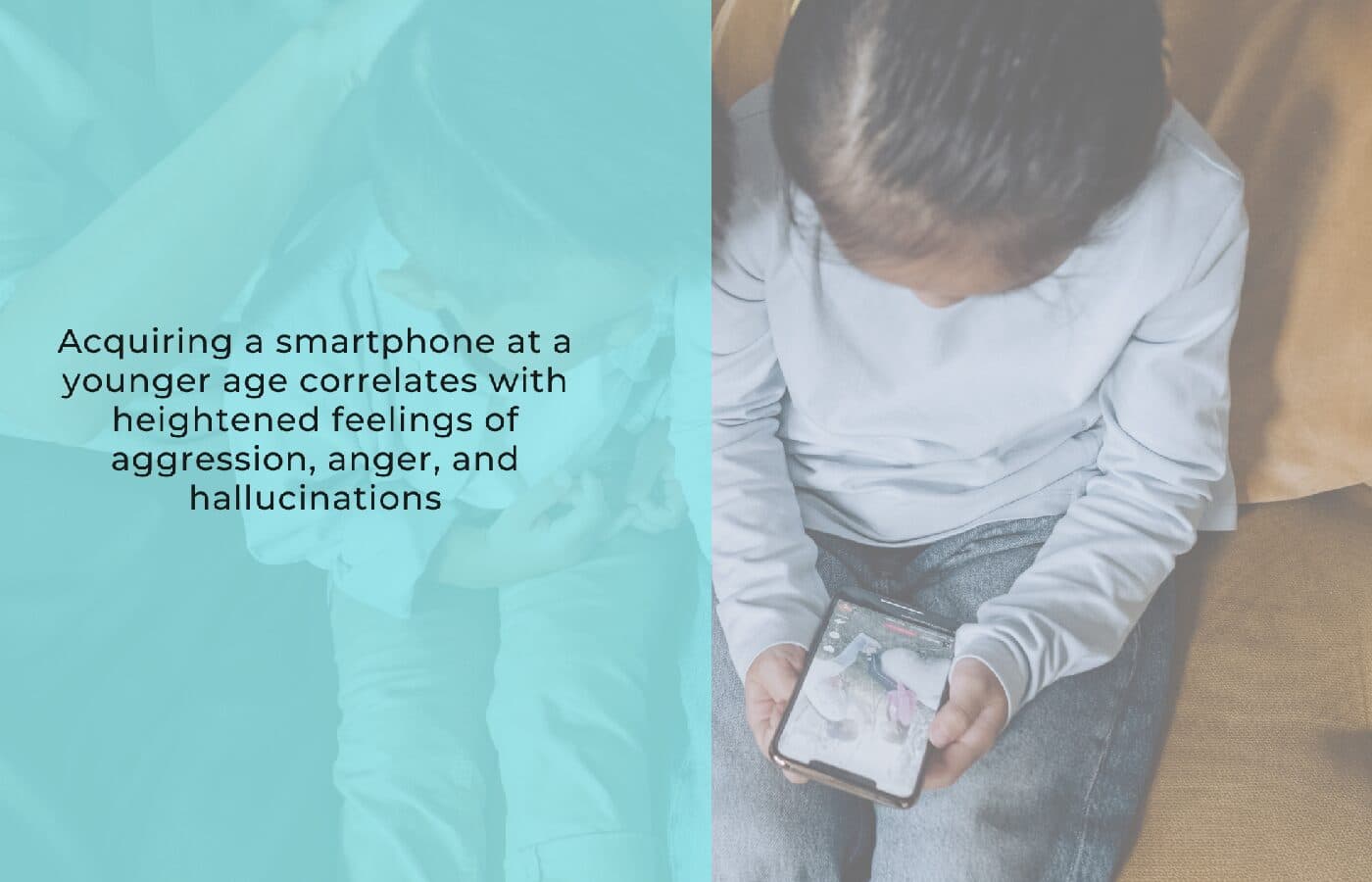
The study, encompassing data from 10,475 children aged 13 to 17 in the United States and India, highlights that acquiring a smartphone at a younger age correlates with heightened feelings of aggression, anger, and hallucinations.
Research indicates that today’s 13-year-olds typically received their first smartphones at age 10, while 17-year-olds acquired theirs around ages 11 or 12. This earlier exposure is linked to a significant increase in mental health challenges. Notably, over 50% of adolescents reported experiencing persistent sadness, guilt, and anxiety that adversely affected their daily lives. Additionally, 51% struggled with unwanted, strange thoughts, and 46% felt detached from reality.
The study also reveals that younger adolescents exhibit more pronounced issues. For instance, 37% of 13-year-olds reported feelings of aggression towards others, compared to 27% of 17-year-olds. Similarly, 20% of 13-year-olds experienced hallucinations, while this was reported by 12% of 17-year-olds.
While smartphone use may contribute to these mental health struggles, it does not fully explain the overall decline in adolescent well-being observed in recent years. Other factors, such as reduced in-person social interactions, changes in sleep patterns, and increased exposure to distressing online content, may also play a role.
In light of these insights, the experts recommend delaying the provision of smartphones to children until at least the 8th grade or age 13. This delay could allow more time for developing healthier social skills and potentially reduce tendencies toward anger and aggression.
The report underscores the urgency for parents, educators, and policymakers to reconsider the timing of smartphone introduction to children and to implement strategies to manage screen time.